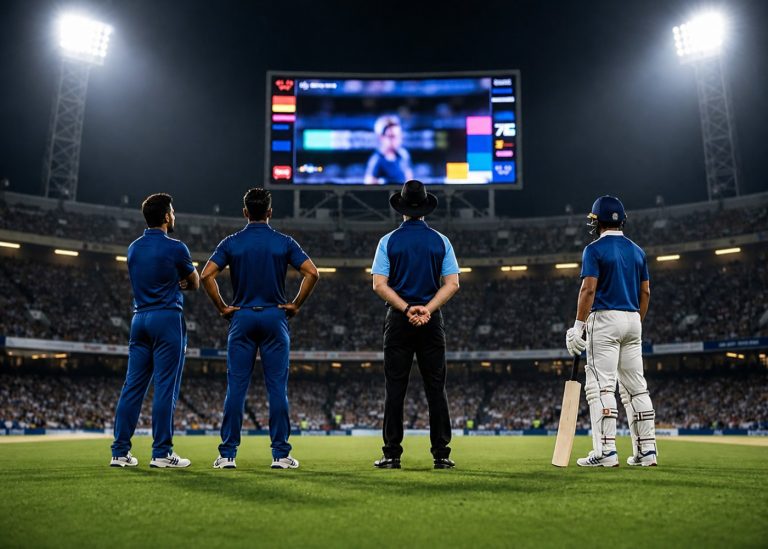
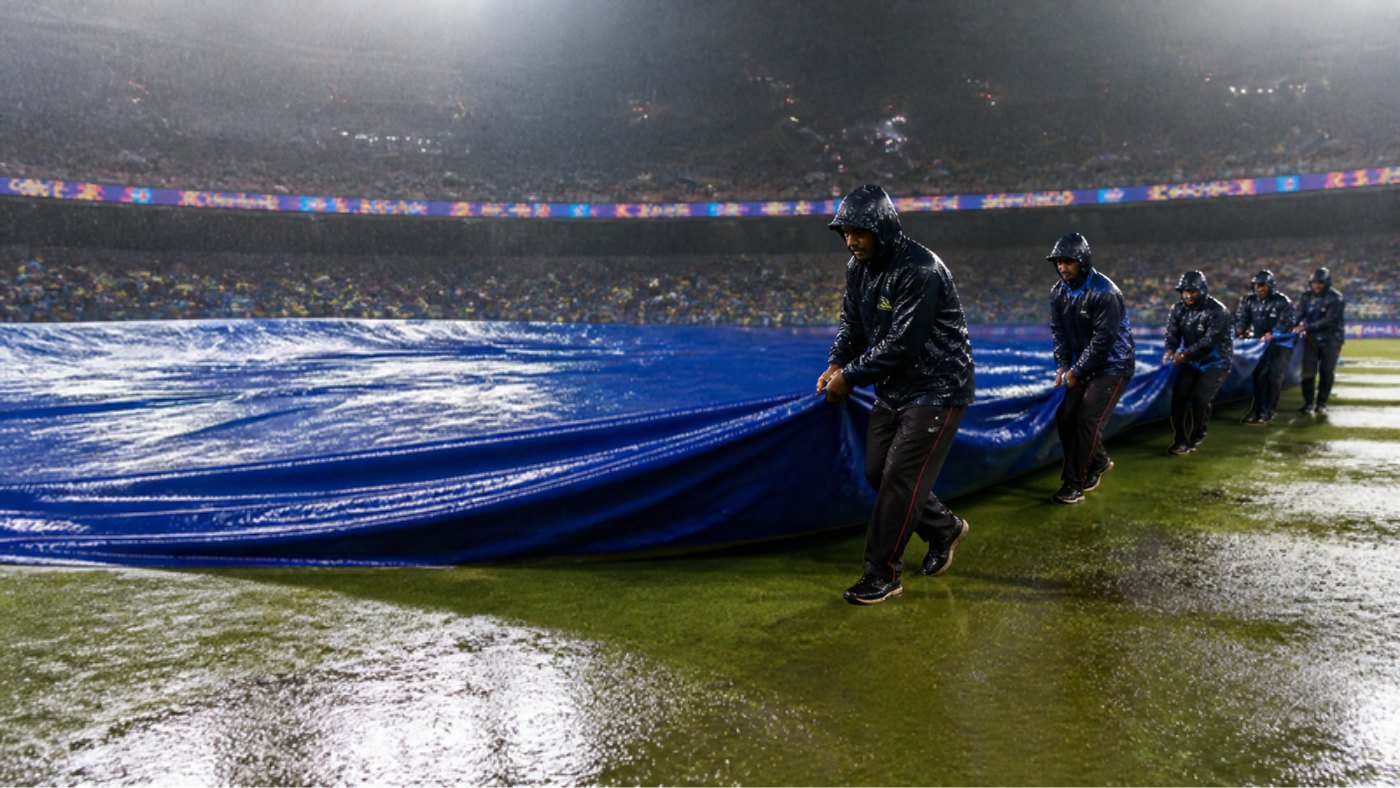
When rain shortens a limited overs match, somebody has to decide what a fair target is. The Duckworth Lewis Stern method does that, and it rests on a single idea that takes about a minute to grasp.
The one idea underneath it
A batting side has two resources and only two: overs remaining and wickets in hand. Everything else is detail. A side that is 50 for no wicket after 10 overs has almost all of its resources left. A side that is 50 for 7 after the same 10 overs has very few, because it cannot attack without losing the rest.
DLS puts a number on how much of those combined resources a side has used at any moment. At the start of a fifty over innings a team has 100 percent. Lose overs to rain and the figure drops. Lose wickets and it drops faster.
How a revised target is produced
- Work out what percentage of resources Team 1 actually had available.
- Work out what percentage Team 2 will have after the interruption.
- If Team 2 has fewer resources, scale their target down in proportion. If they have more, which happens when Team 1 is cut short unexpectedly, scale it up.
- Add one run and that is the target.
That final step explains the odd looking numbers. A target of 212 from 34 overs is not a rounding of 211, it is the par score plus one, because a tie needs a definable line.
Why a side chasing can be given a higher target
This one causes more confusion than anything else. If Team 1 bats first and rain ends their innings early, they were pacing themselves for a full quota and had to stop. Team 2 comes out knowing exactly how many overs they have and can attack from the first ball with all ten wickets. They have more resource per over than Team 1 did.
DLS corrects for that by raising the target above what Team 1 actually scored. It looks unfair in the moment and it is the mathematically even outcome.
The minimum overs rule
| Format | Minimum overs for a result |
|---|---|
| One Day International | 20 overs per side |
| Twenty20 International | 5 overs per side |
Below those thresholds there is no result, whatever the score. Too little cricket has been played for any projection to mean anything.
Where the name comes from
Frank Duckworth and Tony Lewis, two English statisticians, devised the method in the 1990s to replace earlier systems that produced indefensible results, most notoriously at the 1992 World Cup when rain left South Africa needing 22 runs from one ball. The ICC adopted it in 1999.
Steven Stern, an Australian academic, took over custodianship in 2014 and revised the underlying tables to reflect how much higher scoring rates had become. The method was renamed Duckworth Lewis Stern in 2015. The professional edition used in international cricket runs on software rather than a printed table, which is why nobody at the ground can tell you the target before the computer has.
What it does not do
- It does not know who is batting. A world class order and a tail are treated identically.
- It does not know the pitch, the weather or whether the ball is swinging.
- It does not account for a side being ahead of or behind the run rate for reasons of tactics rather than resource.
Those limits are deliberate. A method that tried to judge team strength would be arguable in every match. One that counts only overs and wickets is at least the same for everyone.