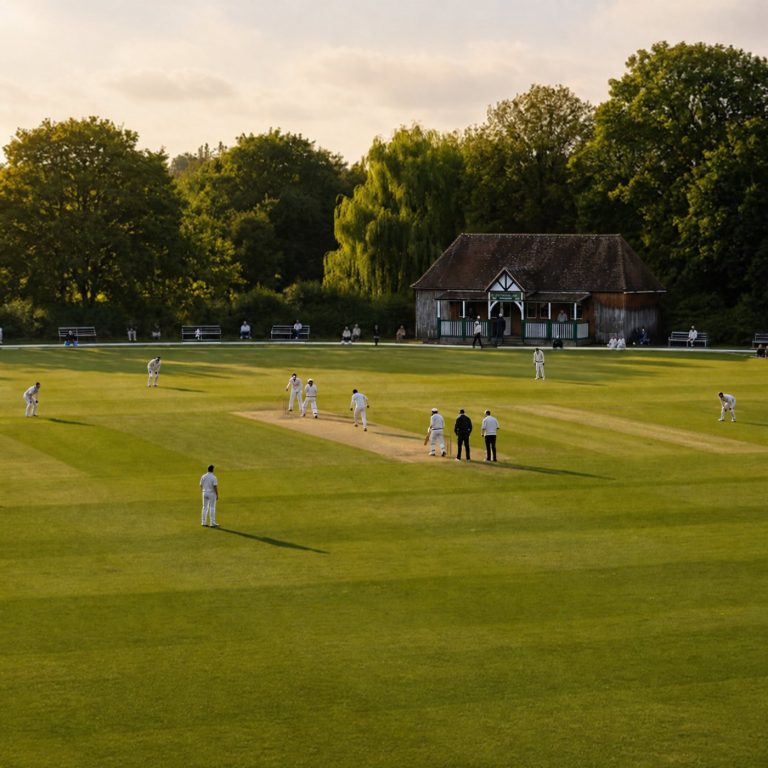
Fielding position names sound like a private language until you learn the two rules underneath them. After that the whole field reads like a map, and a commentator saying “short midwicket” tells you exactly where a fielder is standing without you having to look.
Rule one: the field is cut in half
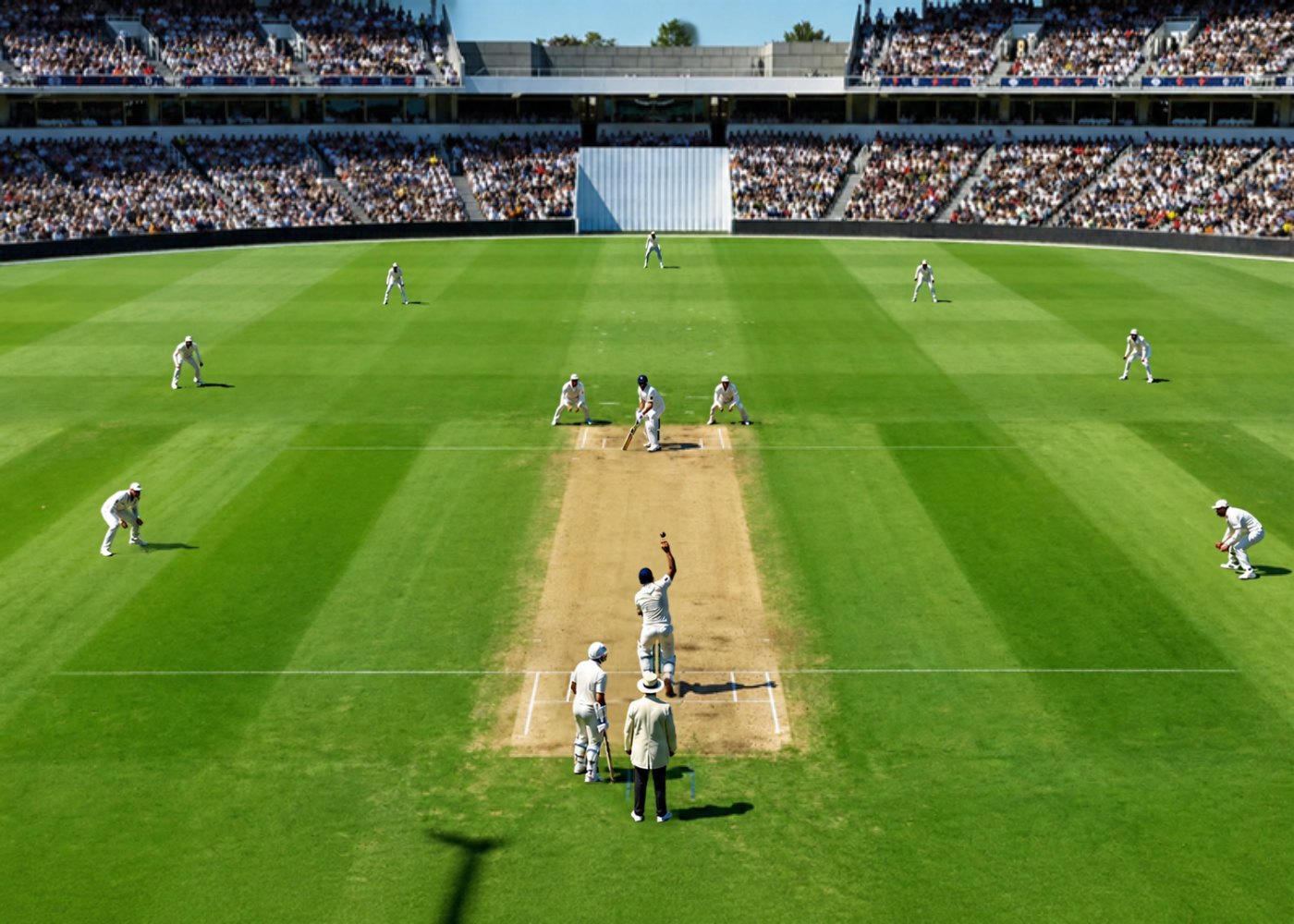
Draw a line down the pitch through both sets of stumps. For a right handed batter, everything on the side the bat is held is the off side. Everything behind the legs is the leg side, also called the on side. For a left handed batter the two swap over, which is why fielders move when the strike changes.
Every position name belongs to one half or the other. Cover is an off side position and always will be. Midwicket is a leg side position and always will be.
Rule two: distance is a prefix
The base name tells you the angle. A prefix tells you how far away the fielder is standing.
- Silly means extremely close, inside the batter’s reach, as in silly point
- Short means close but out of range, saving the single
- No prefix means the standard distance, roughly thirty yards
- Deep or long means near the boundary rope
Put the two rules together and silly mid off, mid off and long off are the same angle at three different distances.
The positions, by region
| Region | Positions | What the captain is doing |
|---|---|---|
| Behind the wicket, off side | Wicketkeeper, first to fifth slip, gully, fly slip | Catching the edge |
| Square of the wicket, off side | Point, backward point, cover point, silly point | Cutting off the square drive and the cut |
| In front, off side | Cover, extra cover, mid off, long off, deep cover | Stopping the drive, then the boundary |
| Straight | Mid on, mid off, long on, long off | Protecting the straight hit |
| In front, leg side | Midwicket, deep midwicket, short midwicket | Covering the flick and the pull |
| Square and behind, leg side | Square leg, backward square leg, fine leg, long leg, leg slip, leg gully | Catching the glance and the top edge of the pull |
Catching positions versus saving positions
Every field setting is a bet. A catching field puts fielders where an error is likely to go in the air. A saving field puts them where a well struck shot will go along the ground. A captain rarely has enough fielders to do both, so the shape of the field tells you what the bowling side is trying to do.
Three slips and a gully with nobody at cover says the bowler is attacking the edge and accepting that a good drive will cost four. A ring of fielders thirty yards out with an empty slip cordon says the bowling side has given up on wickets and is defending a total.
Where the laws limit the captain
A captain cannot simply put everyone where the batter scores. Two restrictions apply in every format. No more than two fielders may stand behind square on the leg side at any time, a rule introduced after bodyline. In limited overs cricket, fielding restrictions also cap how many fielders may stand outside the thirty yard circle, and that cap changes between the powerplay overs and the rest of the innings.
So a field that looks oddly unbalanced is often not a mistake. It is the most aggressive shape the captain is allowed to set.